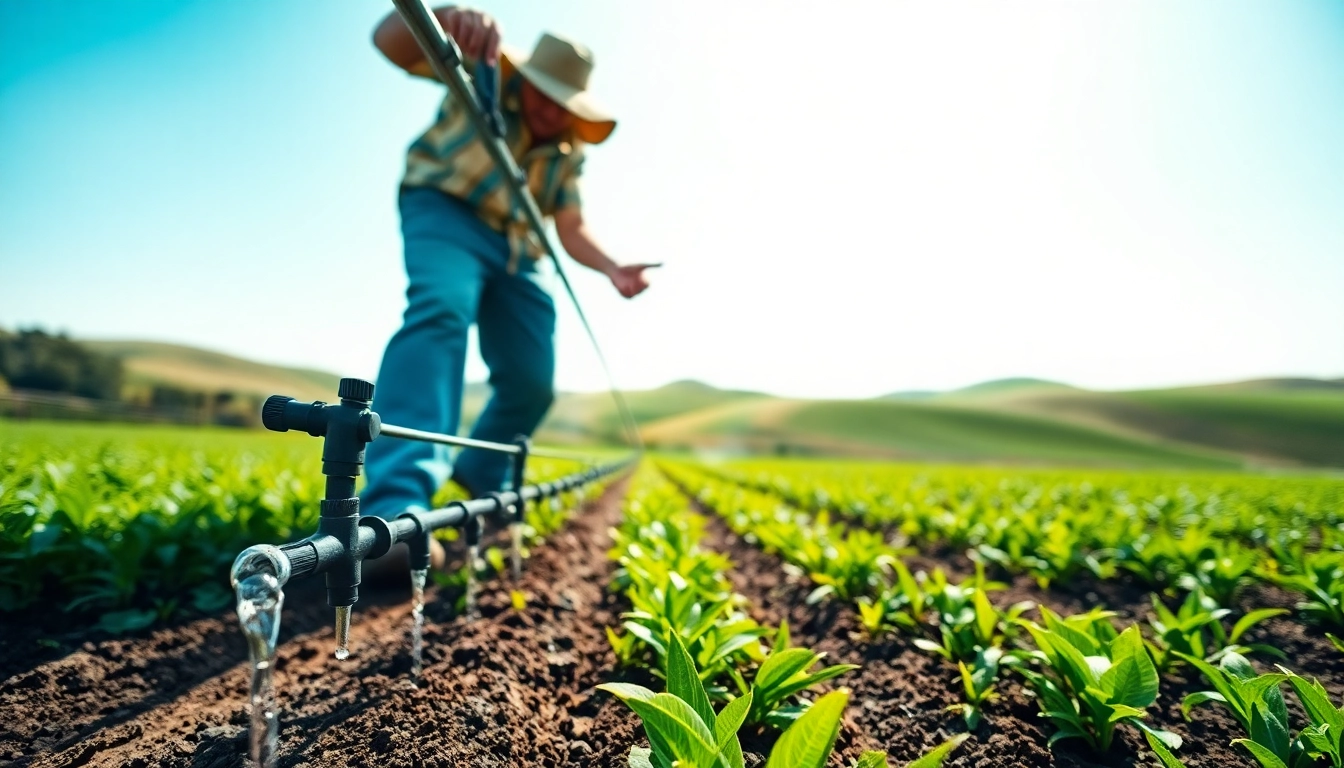
Understanding Land Irrigation
Definition and Importance
Land irrigation is the artificial application of water to soil, which is crucial for agricultural practices. It plays a significant role in enhancing food production, especially in regions where natural rainfall is insufficient. Efficient land irrigation systems help deliver water directly to the root zones of plants, ensuring optimal growth conditions and minimizing water wastage. Overall, proper irrigation promotes sustainable farming, enhances economic stability in agriculture, and contributes to food security.
Historical Evolution of Land Irrigation
The history of land irrigation dates back thousands of years, with ancient civilizations utilizing rudimentary techniques to cultivate crops. The Sumerians, Egyptians, and Chinese employed simple irrigation systems, including canals and basin irrigation, to maximize arable land. Over time, these methods evolved into more sophisticated techniques, influenced by advances in technology and an increasing understanding of crop water requirements. The Industrial Revolution marked a significant turning point, introducing mechanized systems that drastically improved irrigation efficiency, leading to today's modern practices.
Different Types of Land Irrigation
Land irrigation methods can be broadly categorized into three main types: surface irrigation, sprinkler irrigation, and drip irrigation. Surface irrigation refers to the direct application of water to the soil surface, allowing it to flow over the field. Sprinkler irrigation uses a system of pipes and spray heads to distribute water in a manner similar to natural rainfall. Drip irrigation, on the other hand, delivers water directly to the plant roots through a network of tubes, vastly improving water use efficiency. Each method has its own set of advantages and is chosen based on various factors, including crop type, soil conditions, and climatic conditions.
Land Irrigation Techniques
Drip Irrigation: Precision Watering
Drip irrigation is known for its precision in delivering water and nutrients directly to the plant roots. This method reduces evaporation and runoff, making it one of the most efficient irrigation techniques. Essentially, drip irrigation systems consist of a network of tubing that channels water to individual plants through emitters. This technique is particularly beneficial for high-value crops, vineyards, and orchards, as it enhances yield while conserving water resources. Implementation of drip systems involves careful planning, including soil moisture studies and emitter layout design, which ensures that each plant receives the right amount of water.
Sprinkler Systems: Versatility in Action
Sprinkler irrigation is a versatile technique widely used in various farming operations. It simulates natural rainfall by distributing water through a system of pipes and nozzles that create a spray over the crops. This technique is adaptable to different terrains and crop types and can be automated for efficiency. Sprinkler systems can also be modified for varying field shapes and sizes. One common type of sprinkler system is the center pivot, which rotates around a fixed point and can cover large areas of land efficiently. However, proper management is essential to minimize water loss through evaporation and wind drift.
Surface Irrigation: Traditional Methods
Surface irrigation is one of the oldest and simplest forms of irrigation, relying on gravity to distribute water across fields. This method can be done through furrows, basins, or borders, allowing water to flow naturally over the soil surface. While surface irrigation systems are cost-effective and easy to maintain, they require careful management to avoid issues like waterlogging or erosion. Correct planning for furrow slope and system design helps ensure efficient water distribution and can significantly influence crop performance and soil health.
Benefits of Proper Land Irrigation
Water Conservation Efforts
Efficient land irrigation techniques contribute to water conservation by reducing unnecessary water loss. Techniques like drip irrigation conserve water by delivering it directly where it’s needed, minimizing evaporation and runoff. This conservation practice is becoming increasingly critical as water scarcity grows globally. In many regions, sustainable water management can significantly alleviate pressure on local water supplies and promote healthier ecosystems.
Impact on Crop Yield
Proper land irrigation directly correlates with better crop yields. By providing crops with consistent and adequate moisture, farmers can expect more reliable harvests and higher quality produce. Research has shown that implementing efficient irrigation systems can result in yield increases of up to 50% or more, depending on the crops and environmental conditions. Additionally, proper irrigation allows for extended growing seasons, enabling farmers to cultivate a wider range of crops throughout the year.
Economic Advantages for Farmers
The economic benefits of proper land irrigation practices cannot be overstated. Increased crop yields directly lead to higher revenues for farmers. Furthermore, efficient irrigation can decrease labor costs and water expenses, leading to increased profitability. Farmers who invest in modern irrigation systems may also qualify for subsidies or grants aimed at promoting sustainable agricultural practices, enhancing their economic viability in the long run.
Challenges in Land Irrigation
Environmental Concerns and Solutions
While irrigation offers numerous benefits, it also poses environmental challenges, including water overuse, soil salinization, and habitat disruption. Excessive withdrawal from water sources can lead to depletion of aquifers and lower water quality. Solutions such as rainwater harvesting, soil moisture monitoring, and utilizing reclaimed water can mitigate adverse impacts. Adopting integrated water management practices ensures that irrigation contributes positively to both agriculture and the ecosystem.
Technological Limitations
Despite advancements in irrigation technology, certain limitations remain. High initial costs, maintenance needs, and the requirement for specialized knowledge can hinder the widespread adoption of modern irrigation solutions. Some farmers may find implementation daunting due to the complexity of system designs or lack of access to resources. To overcome these hurdles, training programs and farmer cooperatives can provide necessary education and support, fostering innovation in irrigation practices.
Cost Factors to Consider
Investing in effective land irrigation systems involves examining various cost factors, including installation, maintenance, and operational expenses. Understanding the long-term benefits and potential savings is vital when assessing these costs. In many cases, the return on investment can justify initial expenses through enhanced crop output and reduced water usage. Conducting thorough cost analyses and exploring financing options can enable farmers to make informed decisions about their irrigation strategies.
Future of Land Irrigation
Innovations in Irrigation Technology
The future of land irrigation is shaped by continuous advancements in technology. Innovations such as soil moisture sensors, automated systems, and IoT-enabled devices revolutionize how farmers manage water resources. These technologies allow for precise control over irrigation, optimizing water use and improving overall efficiency. Smart irrigation systems provide real-time data that enables farmers to make informed decisions, reducing waste and enhancing productivity.
Sustainable Practices for Long-term Viability
As the global agricultural landscape evolves, sustainable irrigation practices become increasingly important. Emphasizing conservation, efficiency, and environmentally friendly techniques can ensure the longevity and viability of these systems. Practices such as crop rotation, cover cropping, and conservation tillage complement irrigation efforts, promoting healthy soils and reducing water demand over time. Encouraging the adoption of sustainable techniques is essential for maintaining agricultural productivity in the face of changing climate conditions.
Global Trends in Land Irrigation
Globally, trends in land irrigation indicate a shift towards more efficient systems in response to water scarcity and climate change. Governments and organizations are investing in research to develop innovative irrigation solutions and promote sustainable practices. Increasing awareness of water conservation and the importance of food security drives farmers to embrace modern irrigation techniques, focusing on adaptability and efficiency. Collaborative efforts between stakeholders in the agricultural sector can further enhance the potential for sustainable land irrigation.
Frequently Asked Questions
1. What is land irrigation?
Land irrigation is the artificial application of water to soil to aid crop growth, especially in areas where natural rainfall is insufficient.
2. How does drip irrigation work?
Drip irrigation delivers water directly to plant roots through a network of tubes and emitters, maximizing efficiency and minimizing waste.
3. What are the benefits of proper land irrigation?
Benefits include improved crop yield, water conservation, and economic advantages for farmers through reduced costs and increased production.
4. What challenges does land irrigation face?
Challenges include environmental issues, technological limitations, and high initial costs, which can hinder efficient irrigation practices.
5. What is the future of land irrigation?
The future is likely to see innovative technologies, a focus on sustainable practices, and a global emphasis on efficient water management in agriculture.