A wildlife survey can fail before the first image is recorded. Heat, deep water, steep ground, and wary animals can keep people away from the place that needs watching.
Robots give conservation teams another way to collect information. They can carry cameras, microphones, thermal sensors, and environmental probes into places where a person would be slow, unsafe, or too visible.
Quick read
- Ground robots can inspect habitats without sending a person into dense cover.
- Aerial and underwater robots collect views that fixed cameras cannot reach.
- Batteries, weather, maintenance, and sensor errors still limit field work.
What wildlife robots can do
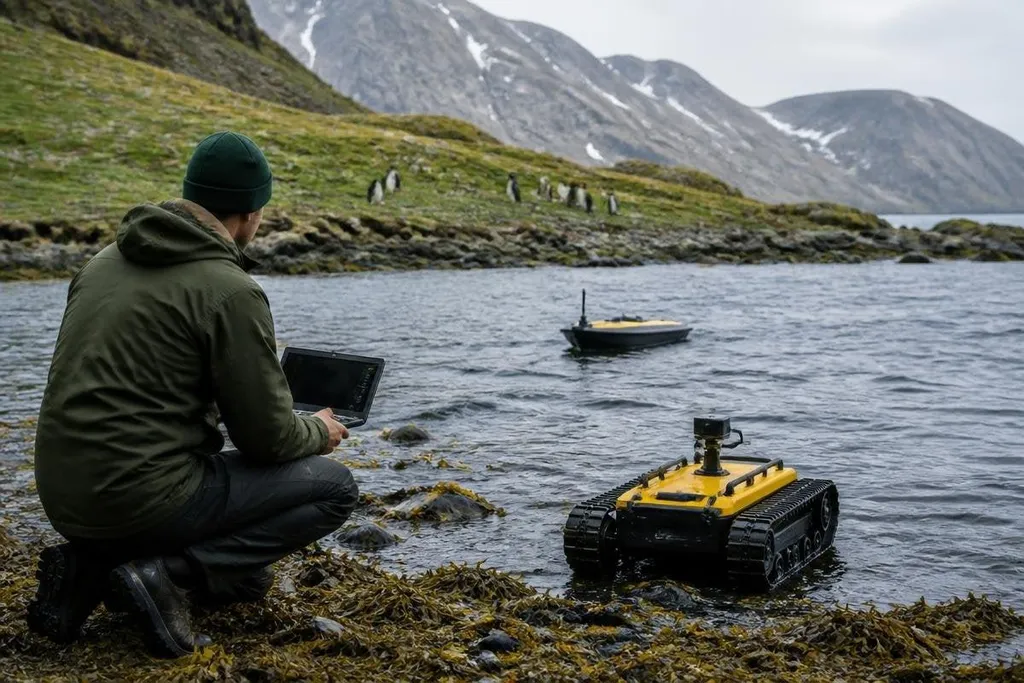
A ground robot can move along a trail, inspect a nest site, or check a damaged fence. Its camera records the scene while its operator stays at a distance. That distance matters when human presence could change animal behavior or put a field worker at risk.
An aerial robot can survey a wide area from above. It may carry a regular camera, a thermal camera, or a sensor that records sound. Each sensor answers a different question: where animals are, whether a body gives off heat, or whether a species is present by its call.
Underwater robots work where visibility, depth, and water conditions make direct inspection difficult. They can record a reef, inspect a riverbed, or check equipment beneath the surface.
A tether can send video and power back to the operator, while a free-swimming vehicle can cover a larger area without a cable.
The useful point is not that a robot replaces a biologist. It gives that biologist another way to gather evidence, especially when a person cannot remain in the area for long.
Why the data matters
Wildlife protection depends on knowing what is happening before a problem becomes hard to fix. A robot can repeat the same route, record the same type of image, or leave a sensor in place for a set period. That makes separate visits easier to compare.
The result still needs human review. A camera may record an animal partly hidden by plants. A microphone may pick up rain, insects, or machinery. A computer vision system may flag the wrong object. The robot collects the material; people decide what the material means.
That human review also depends on records outside the sensor feed: who built the robot, where it ran, which animals it observed, and what the system flagged. Source-based wildlife robotics reporting can connect those details to the machines and sensors behind a field study. The limits in the field start when weather and animal movement push the system beyond a controlled test.
The limits in the field
Wildlife robots have to cope with more than movement. Mud can block wheels. Rain can damage electronics. Glare can reduce image quality. A battery that lasts through a short test may not cover a full survey route.
The robot can also disturb the habitat it was sent to study. Motor noise, lights, propellers, or an unfamiliar shape may change animal behavior. A small ground robot may work near one species and fail near another. The safest design depends on the animal, the terrain, and the task.
Data handling creates another problem. A long recording may contain hours of empty ground or water. Someone still has to store it, sort it, check sensor faults, and mark useful observations. Automation can reduce that workload, but it doesn't remove the need for a clear review process.
A field decision guide
Before choosing a wildlife robot, check these points:
- Define the observation first: decide whether you need images, sound, location data, temperature, or samples.
- Match the vehicle to the habitat: wheels, tracks, aircraft, and underwater vehicles have different limits.
- Set a disturbance limit: test noise, lights, speed, and distance before routine surveys.
- Plan for recovery: include a way to retrieve the robot after a motor fault, lost signal, or low battery.
- Keep a human review step: check automated alerts against the original images or recordings.
That process keeps the machine tied to a real field question. A robot with no clear observation goal can produce a large archive without producing useful evidence.
I think wildlife robots are worth using when they answer a question that people cannot safely or repeatedly answer on foot. Their value will depend less on how autonomous the machine looks and more on whether its records remain accurate, repeatable, and safe for the animals.
The next test is practical: can a robot collect good evidence through a full season, survive field repairs, and leave the habitat largely undisturbed?