
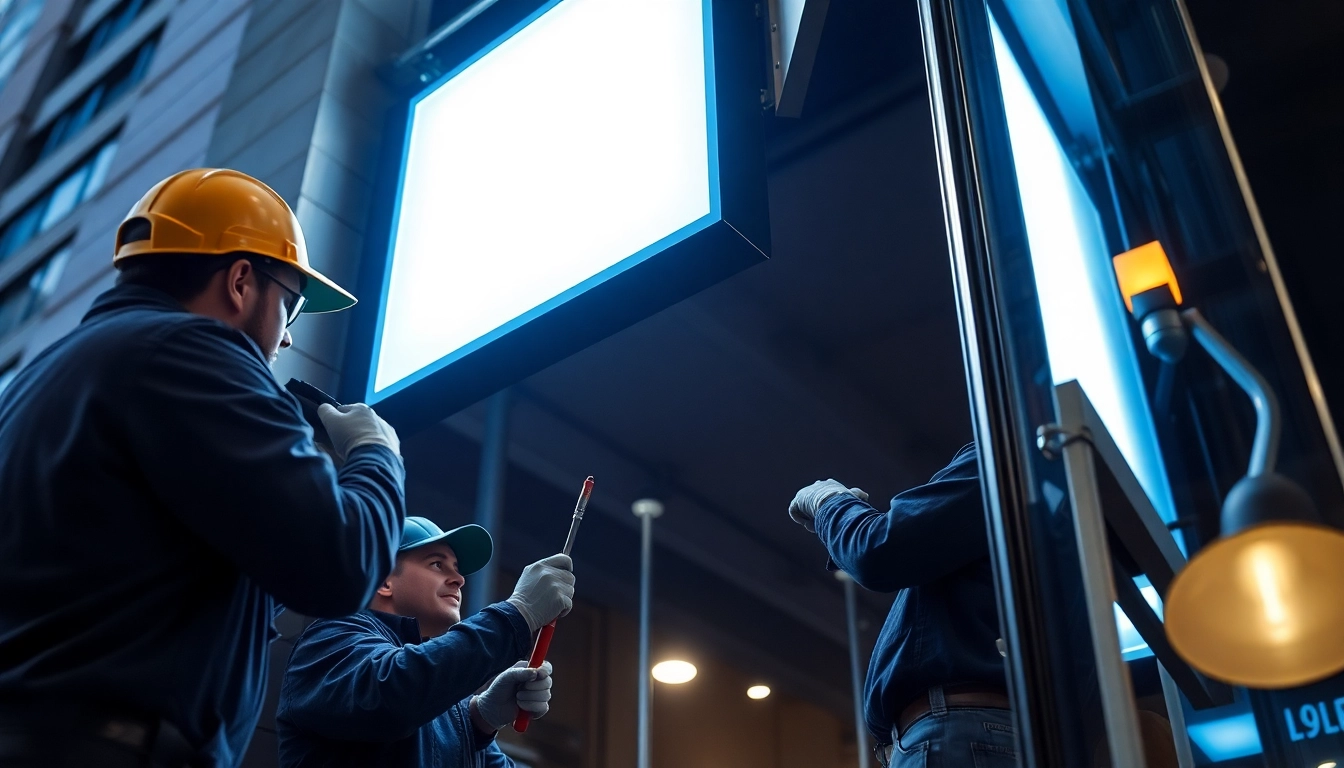
Understanding Sign Installation Basics
What is Sign Installation?
Sign installation involves the process of placing various types of signs at designated locations to convey information, branding, or directions. This can include anything from simple store signs to complex electronic displays. It is essential for businesses and organizations to enhance visibility and communicate effectively with their audience. A well-executed sign installation contributes not only to a company’s identity but also to their overall marketing strategy.
Common Types of Signs
Signs come in various forms, each serving unique purposes. Here are some common types:
- Outdoor Signs: These are crafted for visibility in outdoor settings. Examples include billboards, storefront signs, and directional signs.
- Indoor Signs: Typically used within a facility, they help guide visitors. Types include wayfinding signs, informational displays, and promotional banners.
- Digital Signs: Incorporating technology, digital signs can be updated and controlled remotely, making them ideal for dynamic messaging.
- Vinyl Graphics: Used for both indoor and outdoor applications, these can be applied to windows, walls, or vehicles as a branding tool.
- Posters and Banners: Cost-effective options for temporary promotions or events, easily transportable and versatile.
Importance of Proper Installation
Proper installation of signs is crucial for several reasons:
- Visibility: A poorly installed sign can be hard to see or read, defeating the purpose of attracting attention.
- Safety: Signs must be installed securely to prevent accidents or injuries related to unstable structures.
- Compliance: Many jurisdictions have laws governing sign placement and erection, requiring adherence to codes to avoid fines.
- Brand Image: Signs in disrepair or installed incorrectly can adversely affect public perception of a business.
Planning Your Sign Installation
Assessing Your Location
Before any installation can commence, it is vital to assess the location where the sign will be placed. This involves understanding the local environment, the intended audience, and visibility factors. Look for:
- Traffic Patterns: Identify how foot and vehicle traffic passes your location. High visibility areas tend to yield better engagement.
- Lighting Conditions: Consider how natural light affects visibility at different times of the day.
- Obstructions: Check for any physical barriers that may hinder the sign’s visibility.
- Local Competition: Analyze nearby signs for inspiration while ensuring your design stands out.
Choosing the Right Sign
Selecting the appropriate sign for your needs is fundamental to your project’s success. Factors to consider include:
- Purpose: Identify the sign’s role—whether for branding, information, or direction.
- Design: The design should align with your branding and catch the audience’s attention effectively.
- Material: Choose materials based on durability, weather conditions, and aesthetic.
- Size: Ensure that the sign is appropriately sized for its location to maximize visibility.
Permits and Regulations
Before moving forward with your sign installation, obtain the necessary permits. Regulations differ by location and may dictate various aspects such as sign height, illumination, and placement. General steps include:
- Research: Familiarize yourself with local zoning laws and sign ordinances.
- Approval Process: Submit any design and placement applications to the appropriate local governing body.
- Compliance: Ensure your planned installation adheres to all regulations to avoid delays and fines.
Tools and Materials for Sign Installation
Essential Tools You’ll Need
Having the right tools is crucial for a successful installation process. Here’s a list of essential tools:
- Measuring Tape: For accurate dimensions and placements.
- Level: To ensure your sign is installed straight.
- Drills and Screws: For securing the sign in place.
- Ladders or Scaffolding: Depending on the height of the installation.
- Safety Gear: Including gloves, hard hats, and eye protection.
Best Materials for Durability
The longevity of your sign largely depends on the materials used. Here are some top choices:
- Aluminum: Lightweight yet strong, resistant to rust, and ideal for outdoor signs.
- PVC: Affordable and weather-resistant, suitable for various indoor and outdoor uses.
- Wood: Provides a classic aesthetic but requires treatment to withstand elements.
- Vinyl: Perfect for graphics and banners, easy to maintain and affordable.
- LED Lights: For illuminated signs that enhance visibility, especially at night.
Safety Gear for Technicians
Safety should always be a priority during sign installation. Essential safety gear includes:
- Hard Hats: To protect against head injuries from falling objects.
- Gloves: To prevent cuts from sharp sign edges and protect hands.
- Safety Glasses: Important for protection against debris or chemical exposure.
- High-Visibility Vests: For enhanced visibility near traffic or construction zones.
- Steel-Toed Boots: To protect feet from heavy equipment and potential falls.
Steps for Professional Sign Installation
Preparing the Site
The groundwork for effective sign installation is meticulous site preparation. Follow these steps to ensure efficiency:
- Clear the Area: Remove any obstructions or debris from the installation site.
- Mark the Location: Use stakes or chalk to mark where the sign will be placed based on your assessment.
- Check for Utilities: Before digging, locate underground utilities to prevent accidents.
Installation Techniques and Tips
Proper techniques ensure the sign is secure and correctly positioned. Here are some tips:
- Follow the Design: Adhere closely to the design plans regarding alignment and spacing.
- Use Anchors: Depending on the sign’s weight, proper anchoring helps withstand wind and weather.
- Secure the Sign: Make sure all bolts and screws are tightened to prevent loosening over time.
- Check Visibility: After installation, ensure the sign is clear and visible from intended viewing angles.
Final Inspection and Adjustment
Once installed, conduct a thorough final inspection. Key points to verify include:
- Alignment: Ensure the sign is straight and properly aligned.
- Lighting: Check that all illumination functions as intended, if applicable.
- Cleanliness: Remove any installation debris or tools left on-site.
- Seek Feedback: Confirm with stakeholders that the sign meets expectations.
Maintenance and Troubleshooting for Installed Signs
Regular Check-Ups Importance
Ongoing maintenance is vital to ensure signs remain functional and aesthetically pleasing. Key strategies include:
- Visual Inspections: Regularly check for signs of wear, fading, or damage.
- Cleaning: Dust and debris can obscure visibility; clean signs routinely.
- Functionality Tests: For illuminated signs, routinely check all light sources.
Common Issues and Fixes
Signs can encounter several common issues. Here are some typical problems and solutions:
- Fading Graphics: Schedule a refresh of the design or reprint if colors have deteriorated.
- Loose Mounting: Tighten any screws or bolts that may have become loose over time.
- Burned Out Lights: Replace faulty bulbs promptly to maintain visibility.
- Weather Damage: Inspect for cracks or warping after severe weather and repair or replace as needed.
Updating or Replacing Signs
As your business evolves, so too may your signage needs. Consider the following when updating or replacing signs:
- Rebranding: If your business image changes, you may need to update signage to reflect this.
- New Regulations: Stay informed about any changes in local signage laws that may require updates.
- Technological Advances: Upgrading to digital signs can improve messaging capabilities.
- Customer Feedback: Listen to customer feedback to determine if existing signs are effective or need alteration.
FAQs
What qualifications do I need for sign installation?
You typically need to be trained in carpentry and electrical work, depending on the sign type.
How long does the sign installation process take?
It varies based on the sign’s complexity and the location, but a simple installation can take a few hours.
Do I need a permit for sign installation?
Yes, most municipalities require permits to ensure compliance with local regulations.
How often should I maintain my signs?
Regular maintenance is recommended every 6-12 months to keep signs visually appealing and functional.
Can I install a sign myself?
Yes, but it’s best to hire professionals for complex installations to ensure safety and compliance.